SUBSCRIBE
Healthline uses cookies to improve your experience and to show you personalized ads. Privacy Policy.
More information
Everything You Should Know About the 2019 Coronavirus and COVID-19
Medically reviewed by Cameron White, M.D., MPH — Written by Tim Jewell — Updated on March 2, 2021
Symptoms
Causes
Risk factors
Diagnosis
Treatment
Complications
Prevention
Masks
Coronavirus types
Outlook
What is the 2019 coronavirus?
In early 2020, a new virus began generating headlines all over the world because of the unprecedented speed of its transmission.
Its origins have been traced to a food market in Wuhan, China, in December 2019. From there, it’s reached countries as distant as the United States and the Philippines.
The virus (officially named SARS-CoV-2) has been responsible for over 100 million infections globally, causing around 2.5 million deaths. The United States is the country most affected.
The disease caused by contracting SARS-CoV-2 is called COVID-19, which stands for coronavirus disease 2019.
Let’s bust some myths.
Read on to learn:
how this coronavirus is transmitted
how it’s similar to and different from other coronaviruses
how to prevent transmitting this virus to others if you suspect you’ve contracted it
HEALTHLINE’S CORONAVIRUS COVERAGE
Stay informed with our live updates about the current COVID-19 outbreak.
Also, visit our coronavirus hub for more information on how to prepare, advice on prevention and treatment, and expert recommendations.
What are the symptoms?
Doctors and scientists are learning new things about this virus every day. So far, we know that COVID-19 may not cause any symptoms for some people.
You may carry the virus for 2 days or up to 2 weeksTrusted Source before you develop symptoms.
Some common symptoms that have been specifically linked to COVID-19 include:
shortness of breath
a cough that gets more severe over time
fever
chills
fatigue
Less common symptoms include:
repeated shaking with chills
sore throat
headache
muscle aches and pains
loss of taste or smell
a stuffy or runny nose
gastrointestinal symptoms such as diarrhea, nausea, and vomiting
discoloration of fingers or toes
pink eye
rash
However, individuals with COVID-19 may have some, all, or none of the above symptoms.
For instance, fever is often referred to as the most common symptom of COVID-19. However, a July 2020 study of 213 people with mild disease found that only 11.6 percent of them had experienced fever.
COVID-19 Symptoms Usually Show Up in This Order
Mild COVID-19
Most people with COVID-19 will only have a mild case.
According to the National Institute of Health’s COVID-19 treatment guidelines, people are characterized as having a mild case if they:
have any of the typical symptoms of COVID-19 (such as cough, fatigue, or loss of taste or smell)
don’t have shortness of breath or abnormal chest imaging
Mild cases can still have long-lasting effects. People who experience symptoms months after first contracting the virus — and after the virus is no longer detectable in their body — are referred to as long haulers.
According to a February 2021 research letter in JAMA Network Open, approximately one-thirdTrusted Source of people with COVID-19 had persistent symptoms as long as 9 months after infection.
A December 2020 literature review estimated that 17 percent of people with COVID-19 are actually asymptomatic. This means they have no symptoms at all.
Twenty percent of people who have COVID-19 and require any sort of senior care services are asymptomatic. The authors evaluated data from 13 studies to come up with their estimates.
A January 2021 literature review looked at 61 studies and reports about COVID-19. The researchers concluded that:
At least one-third of all cases are asymptomatic.
Almost 75 percent of people who are asymptomatic when they receive a positive polymerase chain reaction (PCR) test result will remain asymptomatic. PCR tests include nasal swab tests.
Severe COVID-19
Call emergency medical services if you have or someone you care for has any of the following symptoms:
trouble breathing
blue lips or a blue face
persistent pain or pressure in the chest
confusion
excessive drowsiness
The Centers for Disease Control and Prevention (CDC)Trusted Source is still investigating the full range of symptoms.
COVID-19 versus the flu
The 2019 coronavirus causes more deaths than the seasonal flu.
According to the CDC, an estimated 0.04 to 0.16 percentTrusted Source of people who developed the flu during the 2019–2020 flu season in the United States died by April 4, 2020.
In comparison, about 1.80 percent of those with a confirmed case of COVID-19 in the United States have died as of March 2, 2021.
The flu and COVID-19 share many of the same symptoms. Common flu symptoms include:
cough
runny or stuffy nose
sore throat
fever
headache
fatigue
chills
body aches
What causes coronaviruses?
Coronaviruses are zoonotic. This means they first develop in animals before being transmitted to humans.
For the virus to be transmitted from animals to humans, a person has to come into close contact with an animal that has the infection.
Once the virus develops in people, coronaviruses can be transmitted from person to person through respiratory droplets. This is a technical name for the wet stuff that moves through the air when you exhale, cough, sneeze, or talk.
The viral material hangs out in these droplets and can be breathed into the respiratory tract (your windpipe and lungs), where the virus can then lead to an infection.
It’s possible that you could acquire SARS-CoV-2 if you touch your mouth, nose, or eyes after touching a surface or object that has the virus on it. However, this is not thoughtTrusted Source to be the main way that the virus is passed on.
SARS-CoV-2 can also be passed on via airborne transmission of small infectious particles that may linger in the air for minutes to hours.
However, contraction of an infection through close contact with people with SARS-CoV-2 — and their respiratory droplets — is currently thought to be much more common.
The 2019 coronavirus hasn’t been definitively linked to a specific animal.
Researchers believe that the virus may have been passed from bats to another animal — either snakes or pangolins — and then transmitted to humans.
This transmission likely occurred in the open food market in Wuhan.
Who’s at increased risk?
You’re at high risk for contracting SARS-CoV-2 if you come into contact with someone who’s carrying it, especially if you’ve been exposed to their saliva or been near them when they’ve coughed, sneezed, or talked.
Without taking proper preventive measures, you’re also at high risk if you:
live with someone who has contracted the virus
are providing home care for someone who has contracted the virus
have an intimate partner who has contracted the virus
Older adults and people with certain health conditions have a higher riskTrusted Source for severe complications if they contract the virus. These health conditions include:
cancer
serious heart conditions, such as heart failure, coronary artery disease (CAD), and cardiomyopathies
chronic kidney disease
chronic obstructive pulmonary disease (COPD)
obesity, which occurs in people with a body mass index (BMI) of 30 or higher
sickle cell anemia
a weakened immune system from a solid organ transplant
type 2 diabetes
COVID-19 and pregnancy
Pregnancy also puts you at a higher risk for complications from COVID-19.
The CDCTrusted Source reports that pregnant women are more likely to experience severe COVID-19 illness than nonpregnant women.
For instance, pregnant women entered the intensive care unit (ICU) at nearly three times the rate of nonpregnant women. Mortality rates for pregnant women are also higher.
According to a study from September 2020Trusted Source, women with COVID-19 are also more likely to have a preterm birth than women without COVID-19.
Transmitting the virus from mother to child during pregnancy isn’t likely, but the newborn is able to contract the virus after birth.
HEALTHLINE RESOURCES
Until you get through this, count on our support
In difficult times, you need to be able to turn to experts who understand and can help strengthen your mental well-being. We’re here for you.
How are coronaviruses diagnosed?
COVID-19 can be diagnosed similarly to other conditions caused by viral infections: using a blood, saliva, or tissue sample.
However, most tests use a cotton swab to retrieve a sample from the inside of your nostrils.
Locations that conduct tests include:
the CDC
some state health departments
commercial companies
certain pharmacies
clinics and hospitals
emergency rooms
community testing centers
Visit the websites of your state’s health departmentTrusted Source or the U.S. Department of Health & Human Services to find out where testing is offered near you.
At-home tests
On November 17, 2020, the Food and Drug Administration (FDA)Trusted Source issued its first emergency use authorization (EUA) for a COVID-19 self-testing kit.
The EUA specifies that the test kit is authorized for use by people ages 14 years and older whom healthcare professionals have identified as having suspected COVID-19.
The Lucira COVID-19 All-In-One Test Kit is a rapid test, which means that the nasal swab sample doesn’t have to be sent off to a lab. The test kit is available by prescription only and promises results within 30 minutes.
Back on April 21, 2020, the FDATrusted Source authorized the use of the first COVID-19 home collection kit. It’s produced by Pixel by LabCorp.
A cotton swab is provided, and people will be able to collect a nasal sample with it and mail it to a designated laboratory for testing.
It’s authorized for use by people ages 18 years and older.
In recent months, the FDA has also granted EUAs to additional at-home kits, including ones from EverlywellTrusted Source and QuickVueTrusted Source.
DID YOU KNOW?
Emergency use authorizations (EUAs)Trusted Source allow for the use of medical products that haven’t received approval from the Food and Drug Administration (FDA).
The FDA issues EUAs in circumstances where no FDA-approved alternatives are available to help diagnose, treat, or prevent a serious condition.
When to see your doctor
Talk with your doctor right away if you think you have COVID-19 or you notice symptoms.
Your doctor will advise you on whether you should:
stay home and monitor your symptoms
set up a telehealth visit
come into the doctor’s office to be evaluated
go to the hospital for more urgent care
What treatments are available?
There’s currently no cure for an infection caused by the new coronavirus. However, many treatments and vaccines are currently under study.
On October 22, 2020, the FDATrusted Source approved its first COVID-19 treatment, the medication remdesivir (Veklury). It’s available by prescription to treat COVID-19 in people ages 12 years and older who’ve been hospitalized. It’s administered as an intravenous (IV) infusion.
In November 2020, the FDA also granted EUAs to monoclonal antibody medications.
Monoclonal antibodies are human-made proteins that help the body develop an immune response against foreign-made substances such as viruses.
These medications are:
bamlanivimab, from Eli LillyTrusted Source
casirivimab and imdevimab, which must be administered together, from Regeneron PharmaceuticalsTrusted Source
Like remdesivir, they’re also administered by IV infusion and intended to treat COVID-19 in people ages 12 years and older. These medications are used for outpatient therapy.
The FDA has also issued EUAs to a few other treatments, such as convalescent plasma, that are intended for treatment in people who are hospitalized or at high risk for hospitalization.
Most COVID-19 treatment focuses on managing symptoms as the virus runs its course.
Seek medical help if you think you have COVID-19. Your doctor will recommend treatment for any symptoms or complications that develop and let you know if you need to seek emergency treatment.
Treatments for other coronaviruses
Other coronaviruses such as severe acute respiratory syndrome (SARS) and Middle East respiratory syndrome (MERS) are also treated by managing symptoms. In some cases, experimental treatments have been tested to see how effective they are.
Examples of therapies used for these illnesses include:
antiviral or retroviral medications
breathing support, such as mechanical ventilation
steroids to help reduce lung swelling and inflammation
blood plasma transfusions
What are the possible complications from COVID-19?
The most serious complication of COVID-19 is a type of pneumonia that’s been called 2019 novel coronavirus-infected pneumonia (NCIP).
Results from a 2020 studyTrusted Source of 138 people admitted into hospitals in Wuhan with NCIP found that 26 percent of those admitted had severe cases and needed to be treated in the ICU.
The percentage of people who died from NCIP after being admitted to the hospital was 4.3 percent.
It should be noted that people who were admitted to the ICU were, on average, older and had more underlying health conditions than people who didn’t go to the ICU.
NCIP isn’t the only complication specifically linked to the 2019 coronavirus.
Researchers have seen the following complications in people who have developed COVID-19:
acute respiratory distress syndrome (ARDS)
irregular heart rate (arrhythmia)
cardiogenic shock
kidney injury or kidney failure (including needing dialysis)
severe muscle pain
fatigue
heart damage or heart attack
multisystem inflammatory syndrome in children (MIS-C); this is also known as pediatric multisystem inflammatory syndrome (PMIS)
CORONAVIRUS UPDATES
Stay on top of the COVID-19 pandemic
We’ll email you the latest developments about the novel coronavirus and Healthline’s top health news stories, daily.
Enter your email
Your privacy is important to us
How can you prevent coronaviruses?
The best way to prevent the transmission of the virus is to avoid or limit contact with people who are showing symptoms of COVID-19 or any respiratory infection.
The next best thing you can do is practice good hygiene and physical distancing to help prevent bacteria and viruses from being transmitted.
Prevention tips
Wash your hands frequently for at least 20 seconds at a time with warm water and soap. How long is 20 seconds? About as long as it takes to sing your “ABCs.”
Don’t touch your face, eyes, nose, or mouth when your hands are dirty.
Don’t go out if you’re feeling sick or have any cold or flu symptoms.
Stay at least 6 feet (2 meters) away from people. Avoid crowds and large gatherings.
Cover your mouth with a tissue or the inside of your elbow whenever you sneeze or cough. Throw away any tissues you use right away.
Wear a mask or face covering in public places.
Clean any objects you touch a lot. Use disinfectants on objects like phones, computers, and doorknobs. Use soap and water for objects that you cook or eat with, like utensils and dishware.
Multiple vaccines are in development. Two are currently available to certain groups in the United States (such as older adults and first responders) and are helping to prevent transmission of the virus.
On December 11, 2020, the FDATrusted Source granted its first EUA for a vaccine. This vaccine was developed by Pfizer and BioNTech. It can be given to people ages 16 years and older.
On December 18, 2020, the FDATrusted Source granted an EUA to a vaccine developed by Moderna. The Moderna vaccine can be given to people ages 18 years and older.
On February 24, 2021, the FDATrusted Source announced that a one-dose vaccine from Johnson & Johnson was effective against severe COVID-19. The FDA granted an EUA on February 27. The vaccine can be given to people ages 18 years and older.
While certain high risk groups and essential workers are eligible to receive the vaccine now, it may be summer 2021 before the vaccine is available to the public at large.
Should you wear a mask?
If you’re out in a public setting where it’s difficult to follow physical distancing guidelines, the CDCTrusted Source recommends that you wear a cloth face mask or covering that covers your mouth and nose.
When worn correctly, and by large percentages of the public, these masks can help to slow the transmission of SARS-CoV-2.
That’s because they can block the respiratory droplets of people who may be asymptomatic or people who have the virus but have gone undiagnosed.
You can make your own mask using basic materials such as a bandana, a T-shirt, or cotton fabric.
Cloth masks are preferred for the general public since other types of masks should be reserved for healthcare workers.
It’s critical to keep the mask or covering clean. Wash it after each time you use it. Avoid touching the front of it with your hands. Also, try to avoid touching your mouth, nose, and eyes when you remove it.
This helps prevent you from possibly transferring the virus from a mask to your hands and from your hands to your face.
Keep in mind that wearing a face mask or covering isn’t a replacement for other preventive measures, such as frequent handwashing and practicing physical distancing. All of them are important.
Certain people shouldn’t wear face masks, including:
children under 2 years old
people who have trouble breathing
people who are unable to remove their own masks
What are the other types of coronaviruses?
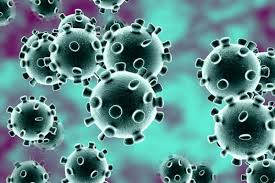
A coronavirus gets its name from the way it looks under a microscope.
The word corona means “crown.”
When examined closely, the round virus has a “crown” of proteins called peplomers jutting out from its center in every direction. These proteins help the virus identify whether it can infect its host.
The condition known as SARS was also linked to a highly infectious coronavirus back in the early 2000s.
COVID-19 vs. SARS
This isn’t the first time a coronavirus has made news. The 2003 SARS outbreak was also caused by a coronavirus.
As with the 2019 virus, the SARS virus was first found in animals before it was transmitted to humans.
The SARS virus is thought to have come from bats and was transferred to another animal and then to humans. Once transmitted to humans, the SARS virus began spreading quickly among people.
However, unlike the new coronavirus, the SARS virus was eventually contained and eradicated.
Learn more about how COVID-19 compares to SARS.
What’s the outlook?
First and foremost, don’t panic. You don’t need to be quarantined unless you suspect you have contracted the virus or have a confirmed test result.
Following simple handwashing and physical distancing guidelines are the best ways to help protect yourself from being exposed to the virus.
The 2019 coronavirus probably seems scary when you read the news about new deaths, quarantines, and travel bans.
Stay calm and follow your doctor’s instructions if you’re diagnosed with COVID-19, so you can recover and help prevent the new coronavirus from being transmitted.
Read this article in Spanish.
HEALTHLINE NEWSLETTER
Get our twice weekly wellness email
To inspire you to exercise and eat well, we’ll send you our top health tips and stories, plus must-read news.
Enter your email
Your privacy is important to us
Last medically reviewed on March 2, 2021
38 sourcescollapsed
READ THIS NEXT
COVID-19 Updates: Moderna Vaccine Still Effective Months Later
The United States continues to have the most COVID-19 cases and related deaths.
READ MORE
Risks of the Delta Variant for Vaccinated vs. Unvaccinated People
Here’s what we know about the health risks posed by the delta variant for vaccinated and unvaccinated people.
READ MORE
Here’s Exactly Where We Are with Vaccines and Treatments for COVID-19
Scientists around the world are working on a number of vaccines and treatments for COVID-19.
READ MORE
When Will We Know If We Need a COVID-19 Booster?
As recently as early July, the CDC and FDA said “Americans who have been fully vaccinated do not need a booster shot at this time.” But some countries…
READ MORE
More Workplaces Are Mandating COVID-19 Vaccines: Can This Get Us to Herd Immunity?
More companies are mandating COVID-19 vaccines for employees. Experts say the requirements can save lives and slow the spread of the disease.
READ MORE
Here’s Where COVID-19 Cases Are Rising and Falling
Experts are concerned about the continued increase in COVID-19 cases and say people need to continue to get vaccinated to slow down the virus’ spread.
READ MORE
Here’s How Well COVID-19 Vaccines Work Against the Delta Variant
In the fight against the delta variant, here is how the Pfizer-BioNTech, Moderna, and Johnson & Johnson COVID-19 vaccines measure up when it comes to…
READ MORE
Why This Is Unlikely to Be the Final Surge in the COVID-19 Pandemic
Experts say the Delta variant along with businesses reopening is fueling the current surge. They expect new variants of the coronavirus in the future.
READ MORE
What We Need to Do Now to Get Ready for the Next Pandemic
Experts say we should be researching vaccines and stocking up on medical supplies to prepare for the next pandemic after COVID-19.
READ MORE
Restaurants, Bars Asking Patrons for Proof of Vaccination: What to Know
Restaurants and bars in some cities have begun to require that customers show proof of vaccination before they’re allowed to dine indoors. Medical…
READ MORE
Get our wellness newsletter
Filter out the noise and nurture your inbox with health and wellness advice that’s inclusive and rooted in medical expertise.
Enter your email
Your privacy is important to us
About Us
Contact Us
Privacy Policy
Privacy Settings
Advertising Policy
Health Topics
Medical Affairs
Content Integrity
Newsletters
© 2005-2021 Healthline Media a Red Ventures Company. All rights reserved. Our website services, content, and products are for informational purposes only. Healthline Media does not provide medical advice, diagnosis, or treatment. See additional information.
AboutCareersAdvertise with us
OUR BRANDS
Healthline
Medical News Today
Greatist
Psych Central

 ALHAJI ISSAH
We need to stay calm and apply to your doctors instruction
LikeLike
Thanks
LikeLiked by 1 person